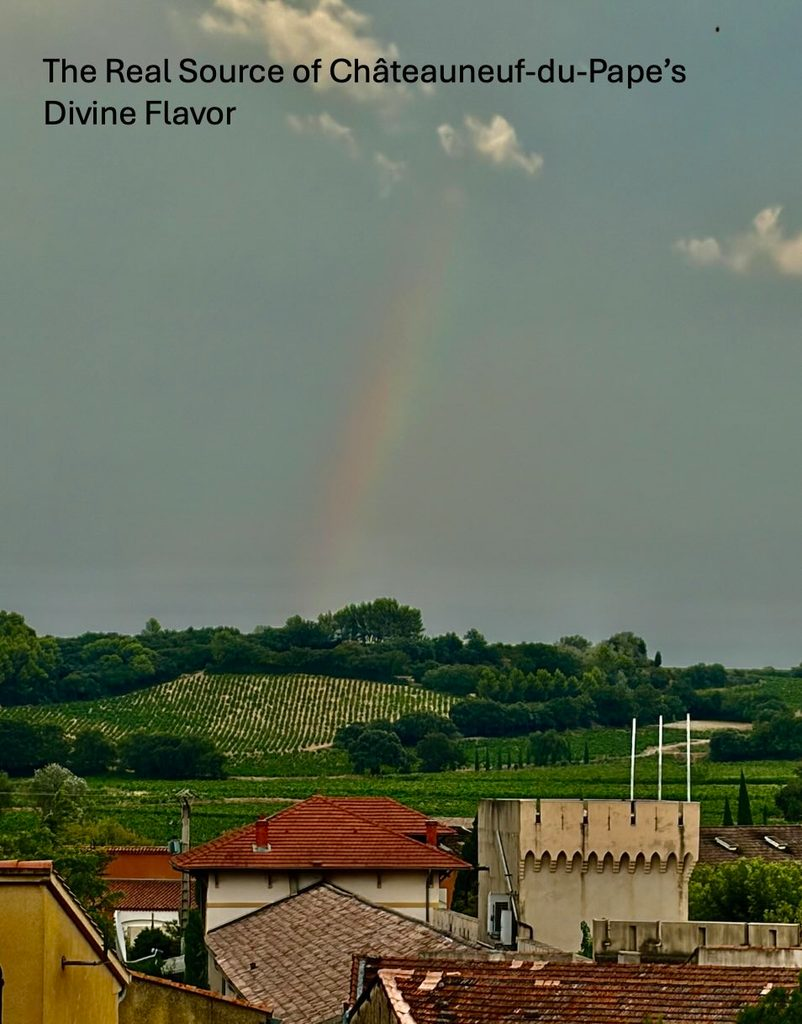
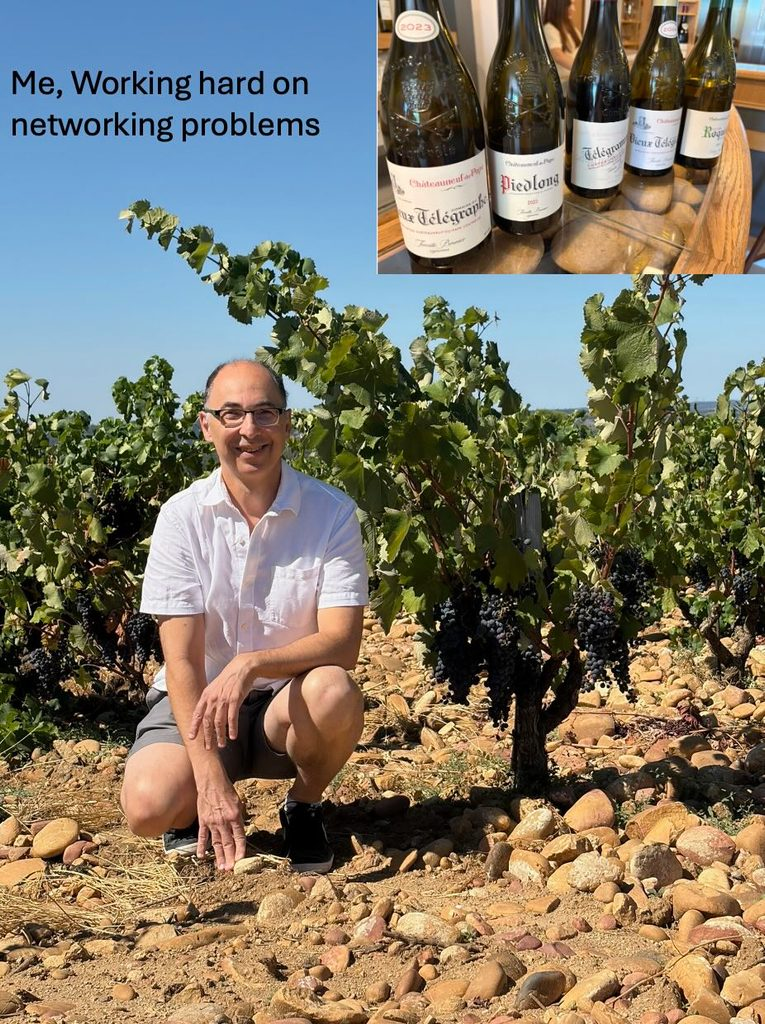
On my recent visit to Châteauneuf-du-Pape, one of the first things that struck me was the ground. Many vineyards are covered with large rounded stones – the famous galets roulés. They absorb heat from the sun during the day and release it later, while also helping with drainage and protecting the soil below. In effect, the vineyard has a remarkably simple energy-management system built into the landscape.
What struck me is that this is infrastructure, even though it doesn’t look like infrastructure. It is not about producing more energy. It is about making better use of the energy that is already available – where and when it is available.
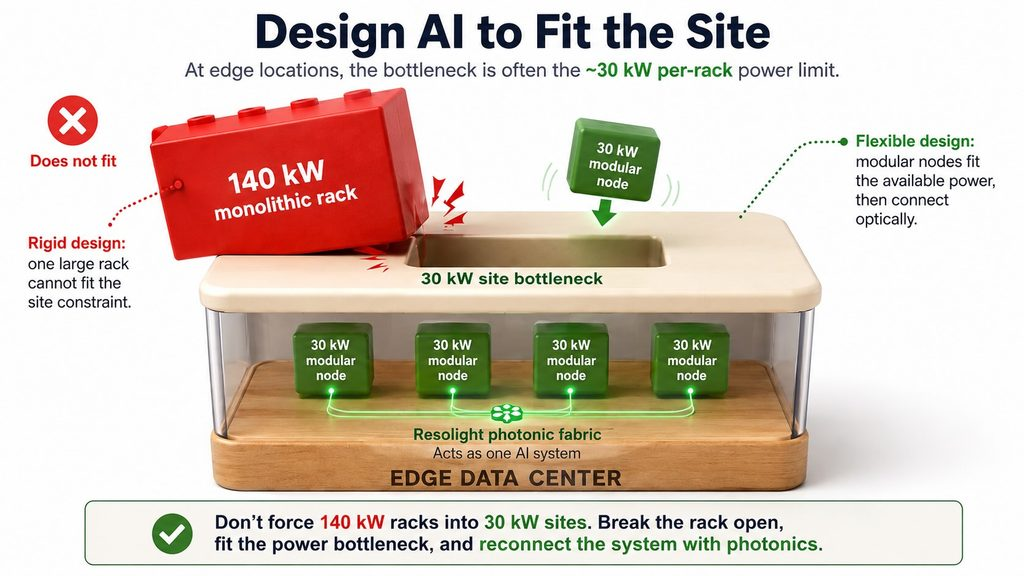
Preparing for a session this week on edge data centers at IEEE Hot Interconnects, I realized that we are facing a surprisingly similar problem with AI. Today, much of the industry is focused on bringing enormous amounts of power to a relatively small number of very large data centers. But power is increasingly one of the hardest things to obtain: generation, grid connections and transmission can all become constraints.
An alternative is to turn the problem around. Instead of asking only:
How do we bring more energy to where we want to put the compute?
We can also ask-
How do we bring the compute to where energy is already available?
That could mean smaller or distributed AI data centers located near renewable generation, underutilized grid capacity, industrial power, or other pockets of available energy. The infrastructure challenge then becomes one of flexibility: making geographically distributed compute resources behave like part of a much larger AI system.
This is where Resolight fits into the picture. If AI infrastructure becomes more distributed, the network connecting compute becomes increasingly important. A flexible, low-energy optical fabric can make it possible to connect compute resources across racks, buildings and potentially more distributed locations without forcing the architecture into today’s rigid electrical networking boundaries. In that sense, better networking gives us another degree of freedom: instead of moving ever more power to the compute, we can increasingly move AI workloads toward the power.
And as I was walking through those vineyards, I realized there was a wonderful personal connection behind the trip. The person who first introduced me to the networking world was also the person who introduced me to Châteauneuf-du-Pape: @Ami Amir, my mentor and the first CEO of RADVISION. So a special thanks to Ami for both introductions — very different ones, but both have turned out to be remarkably useful and inspiring.